BridgeTech Moves to AmCham Tunisia, marking a New Chapter in the Innovation Bridge Between Tunis and Washington

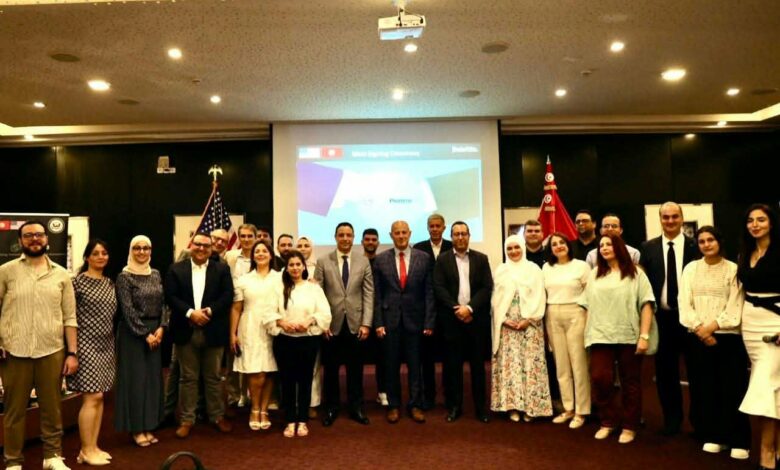
In a move that reflects the growing maturity of Tunisia’s digital ecosystem and the strengthening economic partnership between Tunisia and the United States, the management of the BridgeTech platform has officially been transferred to the American Chamber of Commerce in Tunisia (AmCham Tunisia), marking a new phase for an initiative designed to connect American companies with Tunisian innovation and talent
The transition, announced in Tunis in the presence of U.S. Ambassador Bill Bazzi, positions AmCham Tunisia at the center of a strategic effort to deepen business-to-business cooperation, facilitate technology partnerships, and expand employment opportunities for Tunisia’s rapidly growing pool of information technology graduates
More than a simple institutional handover, the move underscores a broader vision for economic cooperation between the two countries, one increasingly driven by innovation, entrepreneurship, and human capital

From Development Project to Sustainable Economic Platform
BridgeTech was developed under the PromISE project as a digital platform designed to connect U.S. businesses with high-potential Tunisian startups and qualified graduates in information technology and related fields
At a time when companies worldwide are competing for digital talent and innovation partners, the platform has emerged as a valuable gateway between American firms seeking specialized expertise and Tunisia’s growing technology ecosystem
The transfer of management to AmCham Tunisia marks an important step in ensuring the platform’s continuity by placing it within an organization dedicated to strengthening commercial ties between the two nations
For Tunisia, the initiative arrives at a pivotal moment. The country has built a reputation for producing highly skilled engineers, software developers, and technology professionals, while fostering a dynamic startup ecosystem that is gaining international recognition
For American companies, BridgeTech provides access to a market that combines technical expertise, geographic proximity to Europe, competitive operating costs, and a young, multilingual workforce
The handover also represents a significant milestone for the PromISE project. Speaking on behalf of the project team, Insaf Ayari highlighted PromISE’s contribution to strengthening Tunisia’s entrepreneurial ecosystem through initiatives that have connected innovators, graduates, and international partners while expanding opportunities for collaboration and growth
Ayari also reflected on the project’s broader achievements, including support for startup internationalization, participation in major global innovation events, and efforts to enhance the competitiveness of Tunisian entrepreneurs in international markets. The transfer of BridgeTech to AmCham Tunisia, she noted, opens a new chapter for the platform, enabling it to continue fostering recruitment, business partnerships, and innovation-driven cooperation under local institutional leadership

Bill Bazzi: Building Economic Bridges Through Talent
Speaking at the handover ceremony, U.S. Ambassador Bill Bazzi underscored the strategic importance of BridgeTech as a platform capable of translating economic cooperation into tangible business opportunities. He praised AmCham Tunisia for assuming responsibility for the initiative and commended the PromISE project for creating what he described as a “practical and innovative tool” connecting American companies with Tunisian startups and highly qualified graduates in information technology
According to Bazzi, the platform aligns closely with U.S. commercial priorities by facilitating connections between American businesses, emerging Tunisian innovators, and young university graduates. Such interactions, he noted, have the potential to generate new economic, technological, and innovation partnerships that benefit both countries
The ambassador also emphasized the role of BridgeTech in strengthening employability and developing talent pipelines tailored to the needs of companies operating in Tunisia’s expanding digital economy. Access to a skilled workforce, he argued, remains essential to sustaining competitiveness and long-term economic growth
Encouraging American companies and AmCham members to engage actively with the platform, Bazzi said BridgeTech could serve as a catalyst for recruitment, business collaboration, and innovation partnerships. By leveraging the platform’s full potential, he added, both countries would be better positioned to deepen their economic ties and create new opportunities for growth and shared prosperity
His remarks echoed a broader theme that has increasingly defined U.S.-Tunisia economic engagement: the conviction that human capital, entrepreneurship, and private-sector cooperation will play a central role in shaping the future of bilateral relations. For Washington, Tunisia’s growing pool of digital talent represents not only an economic asset but also a strategic foundation for deeper commercial and technological partnerships

AmCham Tunisia Takes the Lead
For his part, Marouane Ben Jemaa, President of AmCham Tunisia, emphasized the organization’s commitment to promoting and expanding the visibility of the BridgeTech platform in the years ahead. He described the initiative as a valuable opportunity for Tunisian professionals, entrepreneurs, and startups to connect with international markets and business partners
Ben Jemaa stressed that BridgeTech should not be viewed solely as a technology-focused platform. While digital innovation remains at its core, he argued that the opportunities it creates extend across multiple sectors of the economy. Innovation, he noted, “has no limits,” highlighting its potential to generate value in fields ranging from industry and services to education, healthcare, and creative industries
According to Ben Jemaa, AmCham Tunisia intends to leverage its network and expertise to promote the platform, attract greater participation from both Tunisian and American stakeholders, and encourage new forms of collaboration. By expanding awareness and engagement, he said, BridgeTech can become a powerful instrument for fostering entrepreneurship, job creation, and cross-border partnerships

Tunisia’s Competitive Advantage
Beyond the ceremonial significance of the transfer, BridgeTech speaks directly to one of Tunisia’s most valuable economic assets: its educated youth
Each year, Tunisian universities produce thousands of graduates in engineering, computer science, artificial intelligence, cybersecurity, and digital technologies. Yet translating this educational strength into large-scale employment opportunities remains a challenge
Platforms such as BridgeTech seek to address that gap by creating direct channels between employers and graduates while simultaneously supporting startup growth and international collaboration
For many observers, this approach reflects a broader shift in economic development strategies, from traditional investment promotion toward ecosystem-building, where startups, universities, investors, and multinational companies interact within a shared digital marketplace
A Strategic Moment for U.S.-Tunisia Economic Relations
The handover also comes amid renewed efforts to expand economic cooperation between Washington and Tunis
Over recent months, Ambassador Bazzi has highlighted new commercial initiatives, investment opportunities, and the growing interest of American businesses in Tunisia. He has also emphasized technology, innovation, higher education, and entrepreneurship as priority areas for bilateral engagement
AmCham Tunisia, meanwhile, has increasingly positioned itself as a facilitator of business dialogue, investment promotion, and commercial partnerships between the two countries. By assuming responsibility for BridgeTech, the organization gains an additional instrument to support cross-border collaboration in one of the fastest-growing segments of the economy: digital technology

Looking Ahead
The success of BridgeTech will ultimately depend on adoption. If American companies actively engage with the platform and Tunisian startups and graduates continue to participate, the initiative could evolve into a model for technology-driven economic cooperation
In a global economy where access to skilled talent is becoming as important as access to capital, BridgeTech represents more than a digital platform. It embodies a new form of economic diplomacy, one built not only on trade and investment, but also on innovation networks, knowledge exchange, and human potential
For Tunisia, the opportunity lies in transforming its talent into global competitiveness
For the United States, it offers access to a dynamic and increasingly sophisticated technology ecosystem at the crossroads of Africa, Europe, and the Middle East
And for both countries, BridgeTech may prove to be exactly what its name suggests: a bridge toward deeper economic integration, innovation-driven growth, and shared prosperity
Malek Chouchi